
about us
With state-of-the-art technology
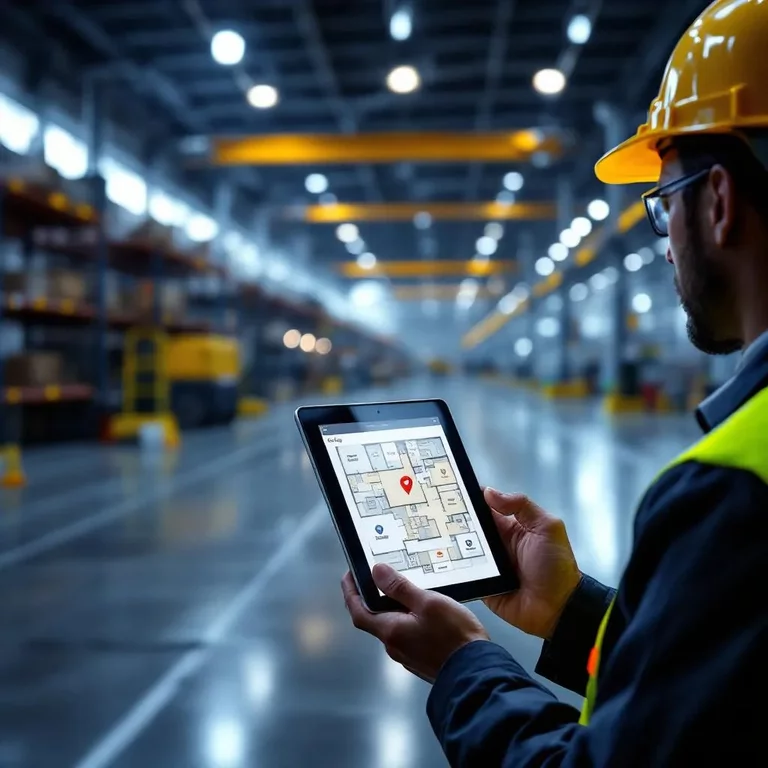
RTLS systems are no longer a nice-to-have in modern industry and logistics, but a prerequisite for efficient processes. Anyone who does not know in real time where materials, vehicles or operating resources are located is wasting time, personnel and money. RTLS creates transparency, reduces search and downtime, and makes processes measurable and controllable. This allows processes to be optimised in a targeted manner, resources to be better utilised and costs to be reduced in the long term. In short, RTLS replaces assumptions with facts and creates the basis for efficient, future-proof processes.
| 98–99 % localisation availability | −20–40% search and downtime | |
| RTLS achieves localisation availability of up to 99% during ongoing operations. | "Reduction in search and downtime by up to 40%." | |
| +15–30% increase in productivity | −10–25% processing costs | |
| "Average productivity increase of 20% through transparent processes." | "Reduction of operational process costs by up to 25%." | |
What you can expect from our experience in industrial digitalisation optimisation
You can expect practical, results-driven industrial digitalisation—not theory or buzzwords. We analyse existing processes, identify real inefficiencies, and turn operational data into measurable improvements. Our experience spans production, intralogistics, and asset-intensive environments where transparency is usually lacking. We implement digital solutions that integrate into existing systems instead of disrupting operations. The focus is always on reducing waste, increasing utilisation, and improving decision-making in real time. Every optimisation is tied to clear KPIs, realistic ROI expectations, and long-term scalability. In short: we make complex industrial processes visible, controllable, and economically better.
01
Proof of technology
Book an on-site appointment and test the technology in your environment.
02
on-site deployment
On-site support and planning.
We take care of project management, setup and validation.
03
Why Bluetooth
Bluetooth is a globally established wireless standard and is integrated into almost every end device – from industrial hardware to smartphones and sensor technology. This makes the technology manufacturer-independent, easily scalable and usable without proprietary dependencies. Bluetooth works reliably in a wide variety of environments, from production halls to logistics centres. It is precisely this broad availability and flexibility that makes Bluetooth a universal basis for industrial digitalisation and positioning solutions.
04
Scalable
AoA systems can be expanded in a modular fashion and grow seamlessly with the area, the number of assets and the requirements. New zones, lines or locations can be integrated without having to set up existing infrastructure or processes from scratch.
What is AoA?
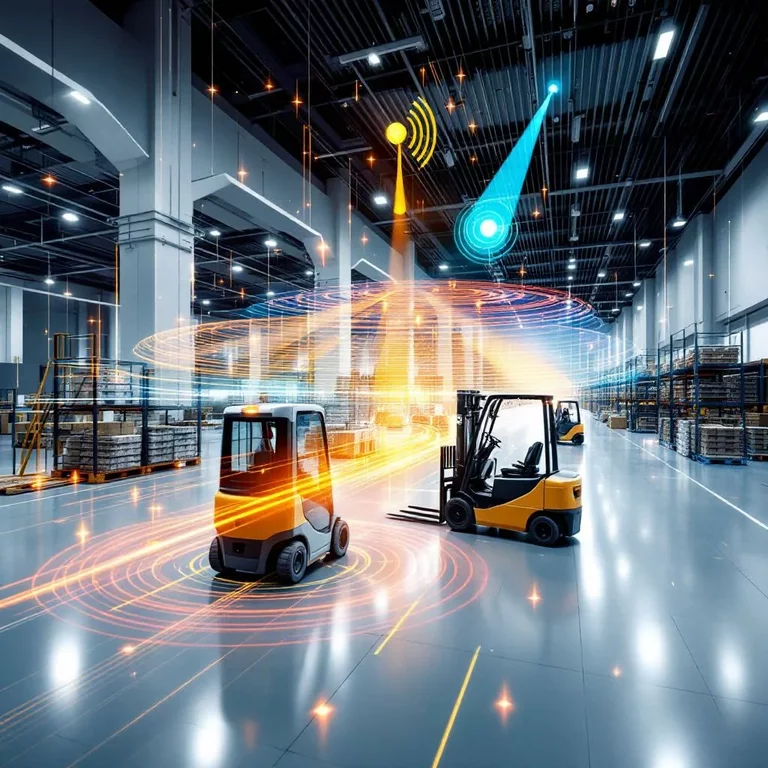
AoA stands for Angle of Arrival and is a radio positioning method for precisely determining the position of objects. A tag transmits a radio signal that is received by several antennas. These antennas measure not only the signal strength, but above all the angle of incidence of the signal. The position is calculated mathematically from the different angles of several reception points. This gives AoA a significantly higher accuracy than classic RSSI-based positioning. AoA is often used with Bluetooth Low Energy because it is energy-efficient and widely used. The system works in real time and is suitable for both indoor and complex industrial environments. Assets, vehicles or people can be reliably located. The infrastructure is modular and highly scalable. This makes AoA a practical technology for transparent, data-driven industrial and logistics processes.
How does it work?
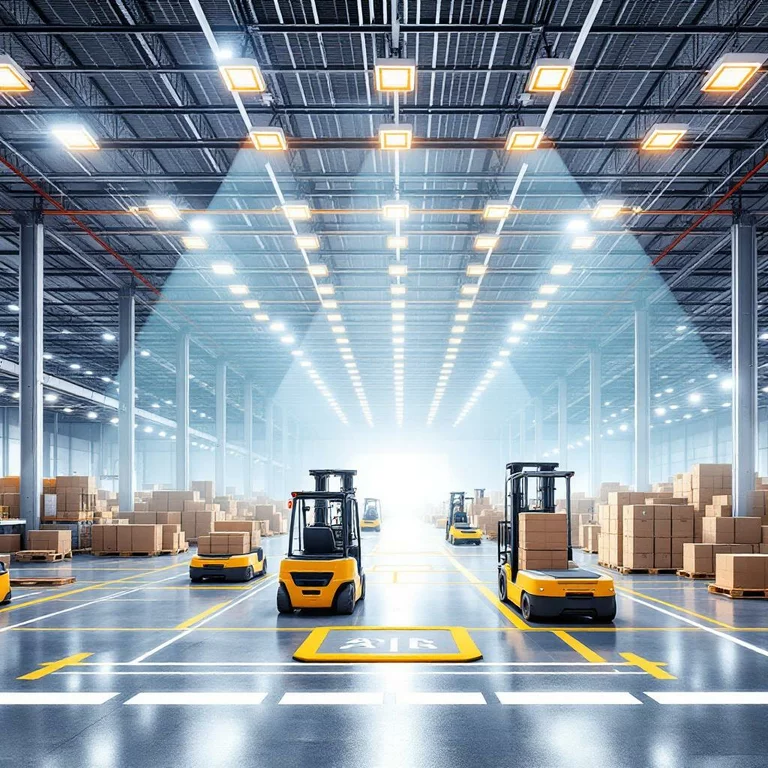
In industrial environments, AoA locators are installed under the hall ceiling to ensure a clear view of the entire area and minimise shadowing. The locators receive Bluetooth signals from production or logistics and use them to calculate precise positions in real time. Bluetooth tags are attached directly to assets such as load carriers, vehicles or tools and transmit signals regularly. In addition, tagless operation is possible by using existing Bluetooth-enabled devices or machines as signal sources – without additional hardware on the object. Installation is deliberately kept simple: locators are connected via PoE (Power over Ethernet), with a single cable for power and data. This eliminates the need for complex electrical installation. The system is modular, scalable and designed for continuous operation – exactly what industrial environments need.
What customers can expect
- Proof of concept
- On-site inspection
- Project planning
- Budget planning
- Project Schedule
- Setup and commissioning
- calibration and validation report
- After-sales support